이소정 개인전 : 거울단계 Sojung Lee : Mirror Stage
갤러리2
2016년 9월 8일 ~ 2016년 10월 15일
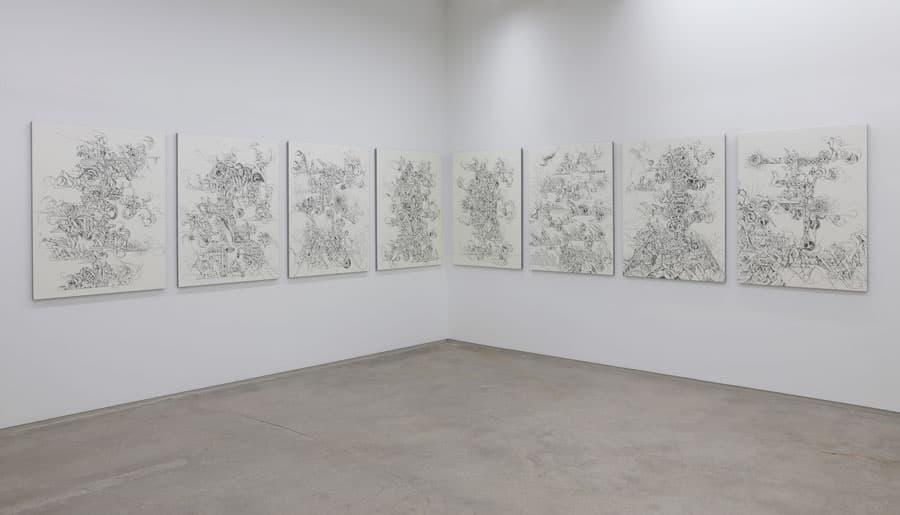
The solo exhibition of Sojung Lee, entitled Mirror Stage, exposes multiplication and variations of shapes with delicate lines using sumi ink. It will be held at Gallery 2 from 8 September to 15 October .
The rhythms of clouds, fury of waves, and blazing of flames. What can we read from unexpected forms. Reading something through chaotic forms depends on our abilities to draw out certain objects, landscapes or emotions we possess within us. An interesting part is that artists take that accidental form as a point of departure for their image and schematize it. Therefore, it is not a matter whether the initial image that they used for their work was invented or discovered. The important thing is what they can create out of it.
The solo exhibition of Sojung Lee Mirror Stage will be presented at Gallery 2. The title Mirror Stage is derived from the psychoanalyst Jacques Lacan. The term the mirror stage refers to a stage where a baby, between 6 to 12 months old, starts recognizing themselves in a mirror. A baby whose consciousness is not yet fully integrated, in a formless, fragmented status recognizes, through a mirror, that they are an entire being that has arms, legs, body, and head. Lacan addressed that the agent of human beings is created through the mirror stage (rather than being predetermined). Sojung Lee believes that this is not only the agent of human beings, but everything in the world reaches a conclusion through the mirror stage.
In Sojung Lee’s painting, a form is successive of a previous form following one after the other. It repeatedly multiplies and continues the succession. A cause produces a result, and vice versa. Due to this process, the painting loses a vanishing point because a detail again brings in another detail to multiply. The majesty of the forms, that little by little eats away space constructing their own world, delivers an odd pleasure to the viewers. At the moment when individual elements, which looked totally unrelated to each other, suddenly become unified, meaning is suggested. The viewer’s joy is enunciated. And that moment arouses an illusion of the mirror stage where a fragmented body is recognized as an entire form.
The initial language carved in the painting derives from another painting out of which it came. From that original form, new flesh and bone are created. Using circular and oval shaped rulers (templates), flesh and bone are developed. The relationship between bone and bone, flesh and flesh, bone and flesh is organic and independent. They are linked like a chain then unexpectedly transformed into something else. It repeats a multiplication and variations. We do not know what the painting indicates or represents. The viewers have no choice but to trail the forms depicted by the artist and read through the painting using all of their insight and senses. But they should keep in mind that a situation is always unpredictable. Black and delicate lines intuitively swim in the painting. The shapes of circles and curved lines, drawn out of the template, flow like the clouds in the sky the wave in the ocean. They seem static but constantly change their forms; they approach as if nearly encroaching into the viewers’ forehead then withdraw far away. This subtle sense of movement fatally arouses the viewer’s pupils.
According to the artist, Lee does not prepare a sketch or choose a complete image beforehand. Lee just forms shapes using sumi ink and a brush in a delicate and fluid manner. The work requires discretion and determination. On the other side of those freely swimming images, the rigorous process of regulating the boundary between excess and moderation is hidden. Lee said that she is in the area ‘2.’ While pursuing the area ‘3’ from the area ‘1’ Lee ends up being in neither ‘1’ nor ‘3’ but ‘2.’ If you believe the Lacan’s theory, that after the mirror stage children continue to develop their agents in order to solve conflict or discord between their body and people or things around them, we are all then standing in the area ‘2.’ To Sojung Lee, the question of whether this exhibition is a turning point or an extension of the previous work holds no meaning at all. Because the life of human beings is the succession of various processes.
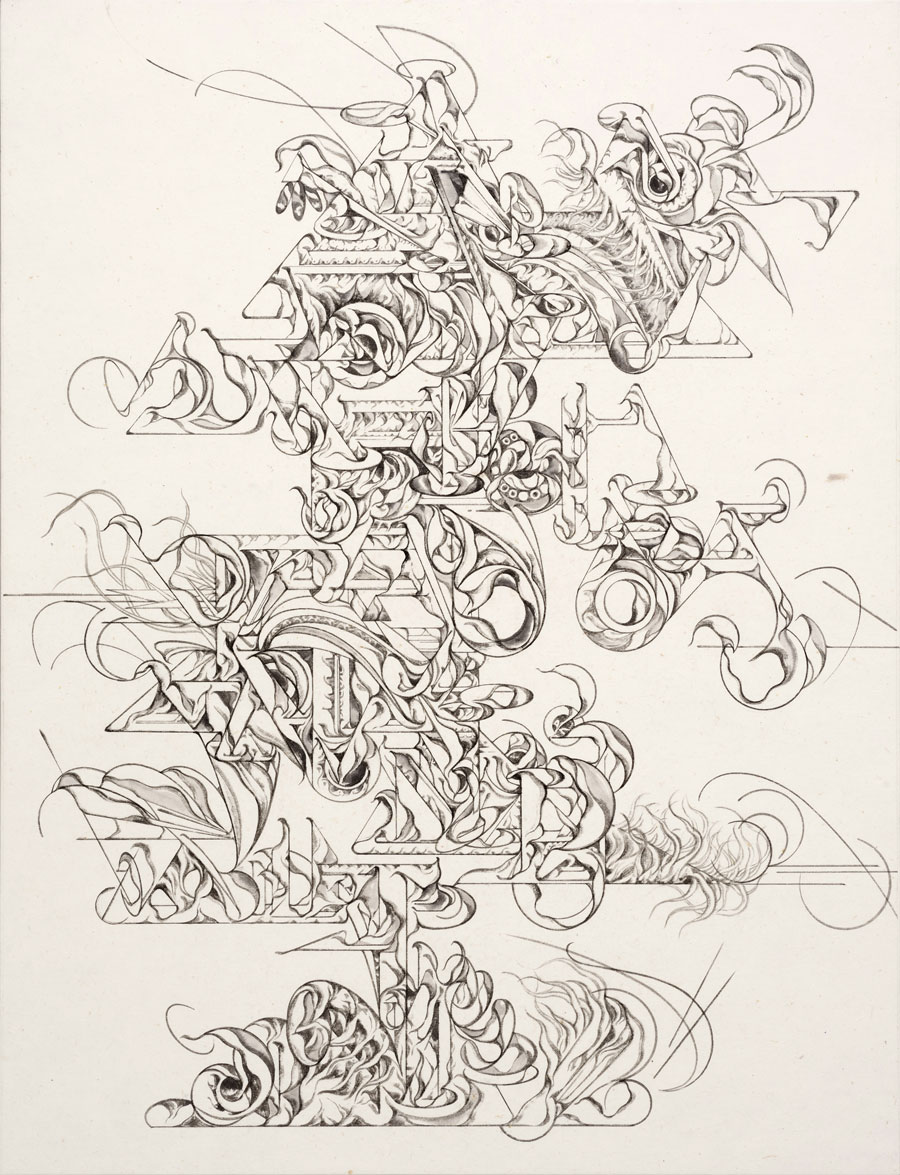
Mirror Stage5_113.5x87cm_Ink on paper_2016
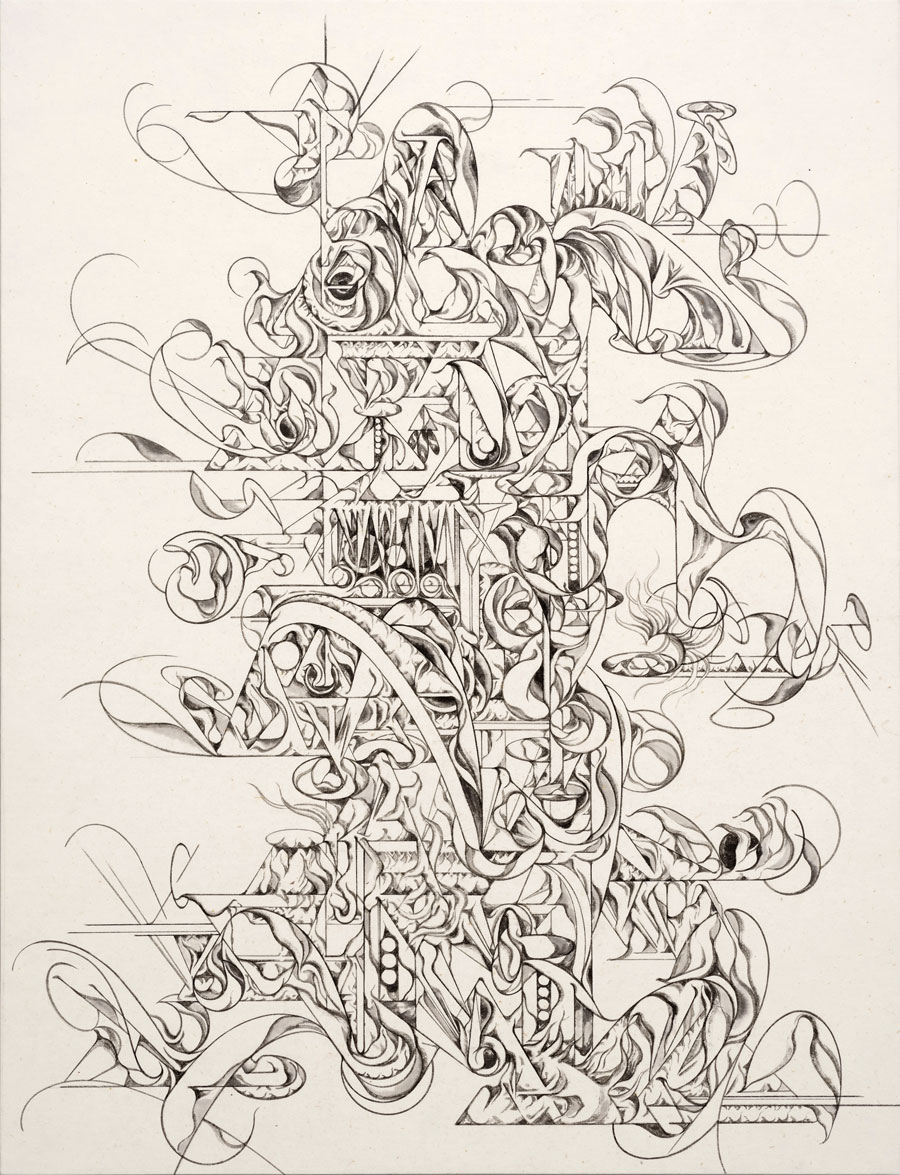
Mirror Stage7_113.5x87cm_Ink on paper_2016
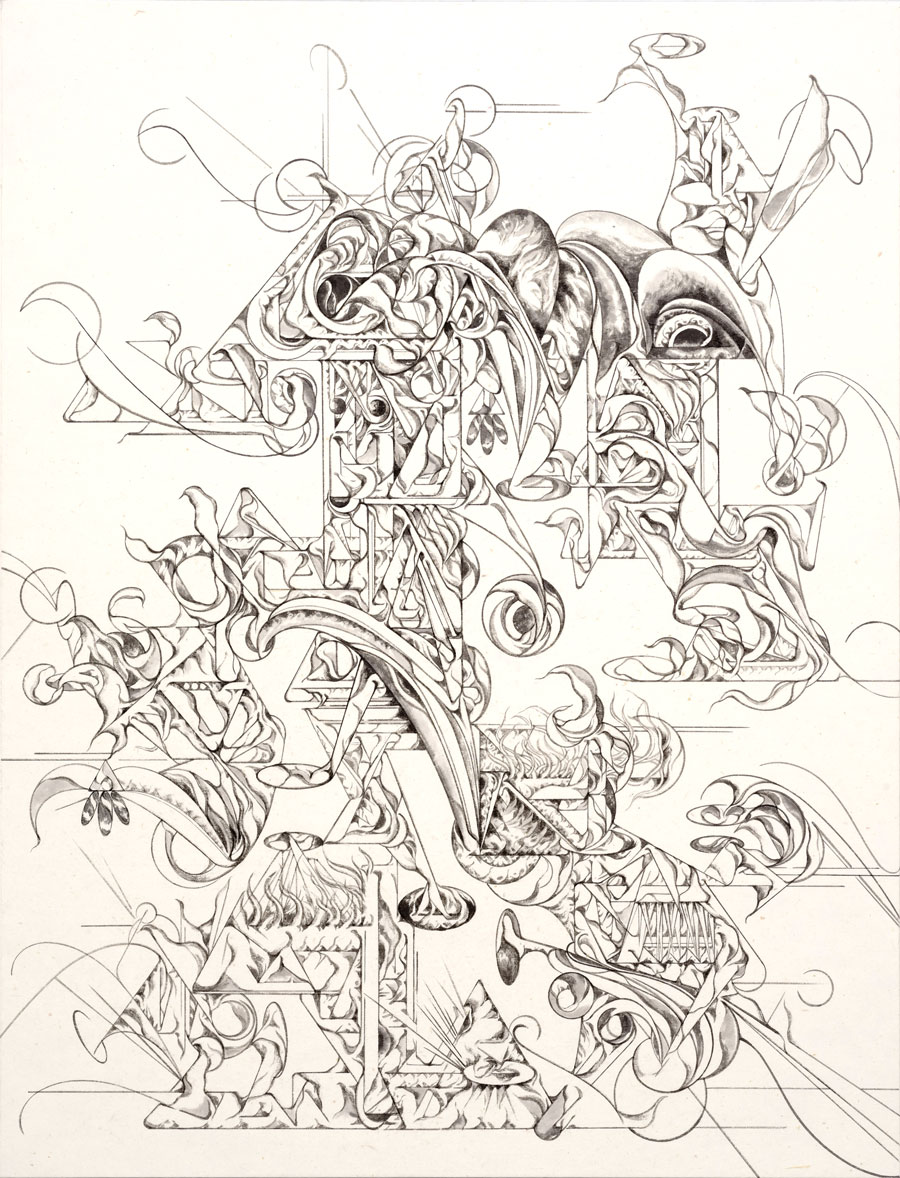
Mirror Stage6_113.5x87cm_Ink on paper_2016
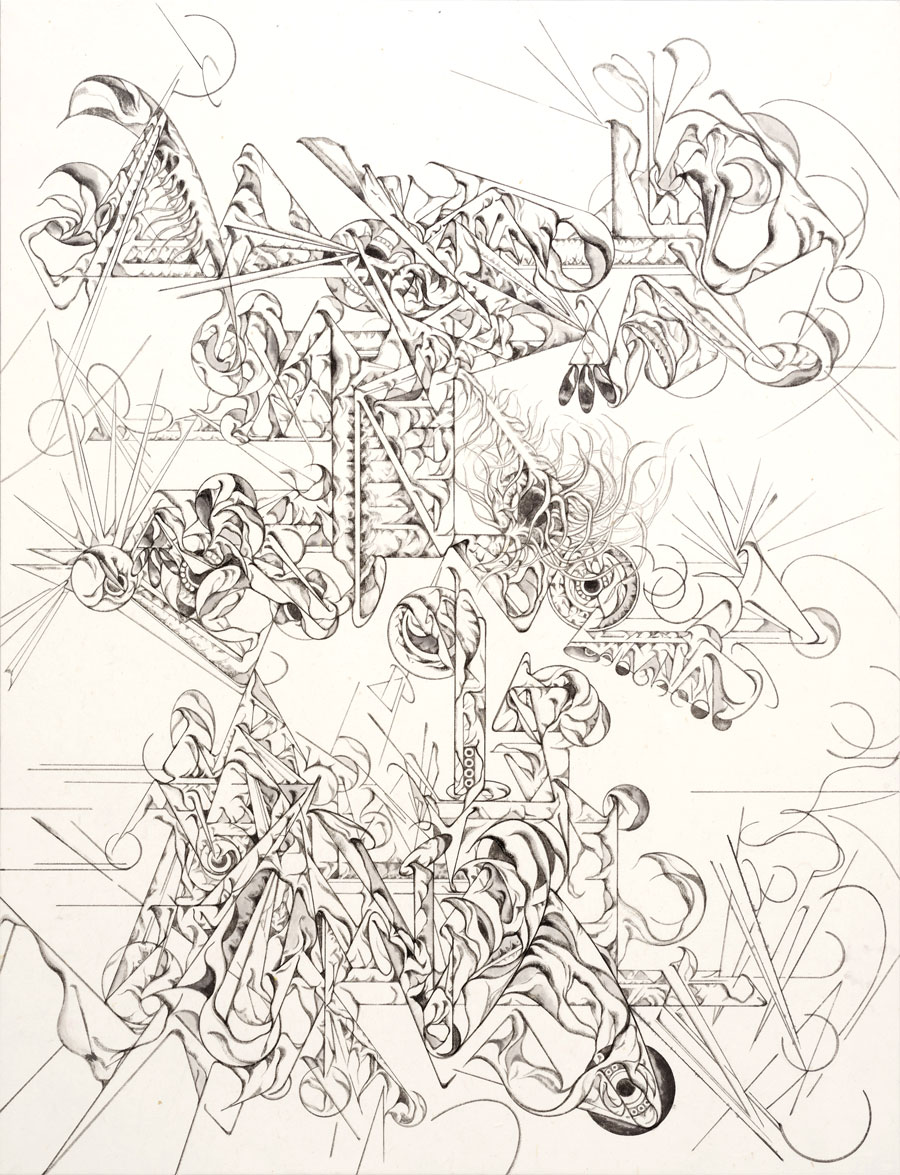
Mirror Stage2_113.5x87cm_Ink on paper_2016
출처 - 갤러리2
* 아트바바에 등록된 모든 이미지와 글의 저작권은 각 작가와 필자에게 있습니다.
운영시간
월요일 휴관
화요일 10:00 - 19:00
수요일 10:00 - 19:00
목요일 10:00 - 19:00
금요일 10:00 - 19:00
토요일 10:00 - 19:00
일요일 휴관
휴관: 일요일, 월요일
모든 프로그램은 주최측의 사정으로 변경될 수 있으니 자세한 내용은 홈페이지를 확인하시기바랍니다
참여 작가
이소정
AD